Bumping into things and tripping on stairs
A child who keeps bumping into things, tripping over bags or dreading stairs may have trouble seeing the lower part of what's in front of them. This is common in CVI, a brain-based vision problem, and standard eye tests often don't check it. Clear the floor, mark step edges with bright tape, and ask the school for an orientation and mobility (O&M) evaluation.
Does this sound familiar?
- Trips over a bag, a toy or a shoe on the floor.
- Misses curbs or the last step.
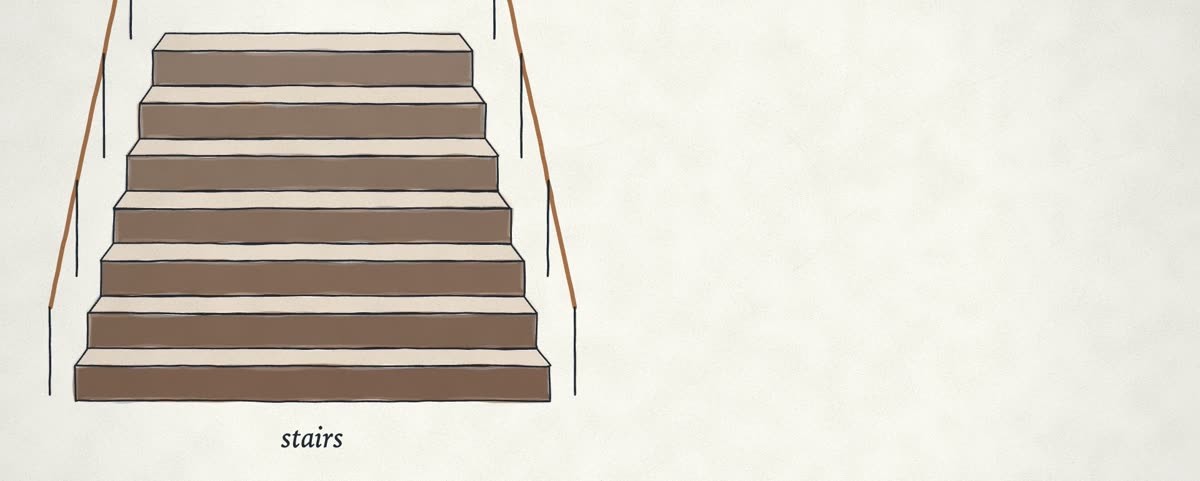
- Hates going downstairs, grips the rail, or taps for each step with a toe.
- Goes down the slide head first.
- Walks along walls, or holds your hand in crowds.
- Bumps into other kids on the playground.
- Struggles with soccer and other low-ball games.
- Gets lost in busy halls, but is fine when they’re empty.
Why it happens
Picture what’s in front of you. The bottom part of that view is where the floor, the steps and the bag are. Some children with CVI have trouble with that lower part. This is called a lower visual field problem.
CVI Scotland says it ranges from mild to severe, and that standard eye tests don’t check this part of vision. So a child can pass the eye exam and still trip on every step.
Other things make it worse:
- Crowds. Perkins says kids with CVI may struggle between classes when halls are full, and not when they’re empty.
- Fast movement. Balls, running kids, a busy playground.
- New places. Familiar routes are easier.
PCVIS says lower field problems usually continue even in kids who use their vision well.
Clumsiness has other causes too: coordination problems, balance, eye conditions, or just being five. A child can have more than one. Write down when and where it happens.
Try this yourself
CVI Scotland suggests this. Get down to your child’s height. Put your hands flat across your face, just above your lips, so they block the view below. Then walk through every room your child uses.
You’ll find the hazards fast: the shoe rack, the step down to the garage, the dog bowl. This doesn’t show what your child sees. It shows where to look for trouble.
What helps at home
- Clear the floor. Bags, shoes and toys go in one spot, off the walkway.
- Mark the edges. Bright tape on the edge of each step, and at the top and bottom of the rail. Perkins suggests a saturated color.
- Give time on stairs. No rushing at the top, middle or bottom.
- Say it out loud. “Three steps down. Rail on your right.”
- Keep furniture where it is. Tell your child before you move anything.
- Pick sports that move one way. CVI Scotland suggests running, swimming and cycling, where everyone goes the same direction.
At school
Ask for an orientation and mobility (O&M) evaluation. An O&M specialist teaches safe, independent moving around. Perkins says every child with a visual impairment, including CVI, has a right to an O&M evaluation.
“[Name] trips on stairs and gets lost in busy hallways, though the eye exam was normal. Can an orientation and mobility specialist evaluate them? Could they also leave class a few minutes early to avoid the crowd?”
Other things to ask for: bright edges on stairs, time on stairs, and a safe role in PE. More at around the school and the school says my child can see. Not sure it’s CVI yet? Start with signs it could be CVI.
Common questions
- Why does my child keep bumping into things?
- Lots of kids are clumsy, and coordination problems, balance and eye conditions can all play a part. One possible reason is trouble seeing the lower part of the view, which is common in CVI. If it comes with tripping on steps and trouble in crowds, ask your doctor about CVI.
- Can CVI affect depth perception?
- It can affect judging steps, curbs and ramps. Perkins School for the Blind lists trouble with changes in depth, like stairs and curbs, as a common sign in children with CVI.
- Why is my child fine in an empty hallway but lost in a busy one?
- Crowds add movement and clutter. Perkins says students with CVI may struggle between classes when hallways are full, but not when they're empty.
Sources (6)
- CVI Scotland, Lower Visual Field
- CVI Scotland, School Support Guide
- Perkins School for the Blind, CVI for Orientation and Mobility Specialists
- Perkins School for the Blind, Why O&M is essential for students with CVI: Part 1
- Perkins School for the Blind, A guide to common CVI IEP accommodations
- PCVIS, Phase III CVI
From cviexplained.com/cvi-lower-field/. General information for families and school staff. Not medical or legal advice. CVI is different for every child.