CVI Phase I, II and III in plain English
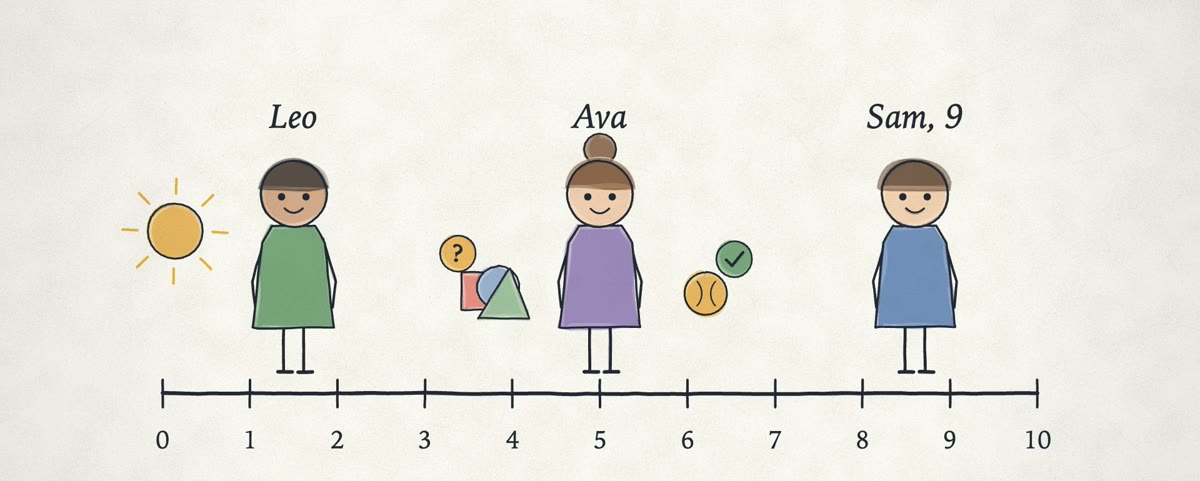
The CVI Range groups children into three phases: Phase I (about 0 to 3) is about steady looking, Phase II (about 3 to 7) is about using vision to do things, and Phase III (about 7 to 10) is about what is still hard, like clutter, faces, distance and new places. Every phase is still CVI. Every child is different, so use the phase as a starting point, not a label.
Read this first
The phases come from the CVI Range, a 0 to 10 tool by Dr. Christine Roman-Lantzy. It describes how a child uses vision, not how healthy the eyes are. More on the score: What is the CVI Range?
The examples below are common patterns, not a test. Your child may fit parts of two phases. Only a trained person, usually a teacher of the visually impaired (TVI), can score the Range.
The goal of each phase
| Phase | The goal |
|---|---|
| I (about 0 to 3) | Look more often and more steadily |
| II (about 3 to 7) | Use looking to do things |
| III (about 7 to 10) | Work on what’s still hard |
Sources draw the lines between phases a little differently. That’s why we say “about”.
At home
| Phase | What it often looks like |
|---|---|
| I | Stares at a lamp or window. Glances at a shiny red toy on a plain dark blanket, then looks away. |
| II | Reaches for a favorite cup on a plain placemat. Misses the same cup on a cluttered counter. |
| III | Finds things in a tidy room, not a messy one. May know you by your voice or coat before your face. |
At school or daycare
| Phase | What it often looks like |
|---|---|
| I | In a noisy room with a busy rug and walls, shows almost no looking. Looks more when it’s quiet. |
| II | Picks an activity from one photo on a tablet. A page full of pictures is too much. |
| III | Reads, but loses the place on a crowded page. Copying from the board is hard. Tired by afternoon. |
Outside and on the playground
| Phase | What it often looks like |
|---|---|
| I | Doesn’t look at moving kids or equipment. Relies on sound and touch. |
| II | Spots a familiar adult a few feet away. Loses them in a crowd. |
| III | Misses what’s happening far away. Unsure on stairs, curbs and uneven ground. |
True in every phase
- It’s all CVI. Phase III kids still have a visual impairment, even when they look fine. See Phase III CVI.
- Give time. A pause before looking is part of CVI in every phase. It gets longer when your child is tired or stressed.
- Less is more. Clutter, noise and new places make looking harder at every level.
- Vision varies. A good day is not the baseline.
- Scores can change, slowly. Support helps your child use the vision they have.
Ask your team
“Which phase is my child in, and what was the score and date? What does that mean for home and school this year? What supports go with it?”
Then read the page for your child’s phase: Phase I, Phase II or Phase III.
Common questions
- What are the 3 phases of CVI?
- They're the three bands of the CVI Range, a tool by Dr. Christine Roman-Lantzy. Phase I is about building steady looking, Phase II about using vision to do things, and Phase III about working on what is still hard.
- Is stage 3 CVI the same as phase 3?
- Yes. Many parents say stage, and the CVI Range says phase. They mean the same band of scores, about 7 to 10.
- Can a child move from one phase to the next?
- Yes, many children's scores rise over time, usually slowly. Nobody can predict how far one child will move, and a child near the line between two phases is common.
Sources (6)
- Pediatric Cortical Visual Impairment Society, Phase I CVI
- Pediatric Cortical Visual Impairment Society, Phase II CVI
- Pediatric Cortical Visual Impairment Society, Phase III CVI
- Perkins School for the Blind, Examining degree of impact and CVI phases
- Texas School for the Blind and Visually Impaired, Why do students with CVI continue to need services from the TVI?
- Christine Roman-Lantzy, The CVI Range
From cviexplained.com/cvi-phases/. General information for families and school staff. Not medical or legal advice. CVI is different for every child.