Phase III CVI: when your child sees but still struggles
Phase III covers about 7 to 10 on the CVI Range: your child uses vision all day and may look like they see normally, but they still have a visual impairment. Busy pages and rooms, faces, things far away, new places, stairs and tiredness can still cause real trouble. Experts warn that vision services are often cut at this stage, and say they should continue.
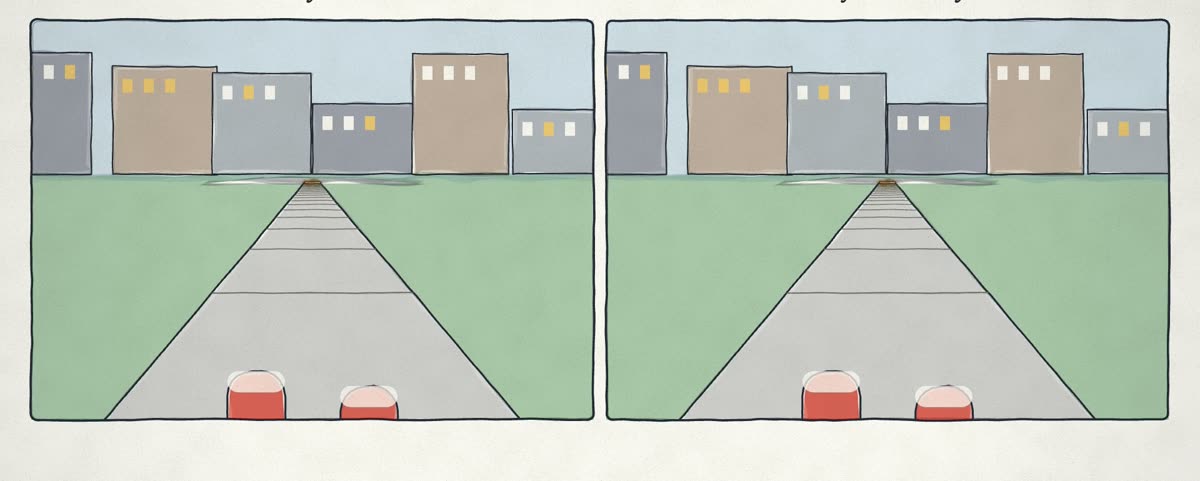
Why your child can look fine and still struggle
Phase III kids use vision all day. They read, walk the halls, play. To someone who doesn’t know CVI, they can look like any other kid.
They aren’t. The Pediatric Cortical Visual Impairment Society, drawing on Dr. Christine Roman-Lantzy’s work, says a Phase III student “remains visually impaired” and still needs adapted materials and specialized teaching. CVI is lifelong.
Many of these kids also pass the eye chart. The 2024 NIH working definition says a normal standard eye exam “does not exclude the presence of CVI.” And a 2025 Cincinnati Children’s study found that kids with higher CVI Range scores were more often diagnosed late.
Phase III and passing the eye chart are related, but they’re not the same thing. Some kids who pass aren’t well described by the CVI Range at all. If that sounds like your child, read My child can see. Why do they still struggle?
What is still hard
| What’s hard | What you might see |
|---|---|
| Busy pages and rooms | Loses the place reading. Can’t find the thing on a crowded shelf. |
| Faces | Walks past a friend who’s waving. Knows people by voice or clothes. |
| Distance | Misses what’s happening across the gym or field. |
| New things and places | Fine in their own room. Lost on a field trip. |
| The lower part of vision | Trips on bags. Slow on stairs and curbs. |
| A pause before looking | Says “I don’t know” first, then answers. |
| Tiredness | Fine at 9 a.m., done by 2 p.m., wiped out by Friday. |
The US pediatric and eye doctor groups say children with CVI can have “significant day-to-day variability” in how they see. An expert panel sums it up in three words: “My Vision Varies.” A good day is not the baseline. More: CVI fatigue, good days and bad days.
Why help should not be cut
The better a child looks, the easier it is to cut their help. That’s the trap.
- Texas School for the Blind and Visually Impaired says vision teacher services “are often reduced” for Phase III students, and that they should be maintained instead.
- The same article says that in Phase III, “visual fatigue is significant.”
- Dr. Roman-Lantzy has written that some students were dismissed from services for scoring 10, “a score I have never assigned.” She calls that an improper use of her tool.
Nobody has measured how much help Phase III kids lose. But the experts who work with them have been warning about it for years.
If the school proposes less vision support, send this:
Subject: Vision services for [name]
I understand [name] scored in Phase III on the CVI Range. Phase III is still a visual impairment. Before any change to vision services, please gather current data on how [name] uses vision across the whole day, including the cafeteria, the hallway at class change and the afternoon. Please send any proposed change, and the reason for it, in writing.
What helps
- Clear the clutter: one or two problems per page, plain backgrounds.
- A copy of the board notes, so your child doesn’t have to copy.
- A seat near the front, on the side they see best, away from the door.
- Adults say their name: “Hi Sam, it’s Ms. Ruiz.”
- No demand for eye contact. Looking and listening at once is hard.
- Extra time. Wait before repeating.
- Breaks, or a switch to listening, before tiredness hits.
- Leave class a few minutes early to beat the hallway crowd.
- An orientation and mobility (O&M) specialist for stairs, curbs and new places.
- A heads-up before new places, substitute teachers and assemblies.
The full teacher version is Teaching a student with Phase III CVI. Print it and hand it over.
Where to go next
Watch the film
The CVI scale: can see, still struggles is a three-and-a-half-minute film about kids near the top of the scale. Send it to anyone who says “but he did it yesterday.”
Common questions
- What does someone with phase 3 CVI see?
- Nobody can tell you exactly what another person sees, and every child is different. Experts describe how Phase III kids use vision: fairly well in quiet, familiar, simple settings, and much less well with clutter, crowds, distance, new places and tiredness.
- Does Phase III mean my child's CVI is mild?
- Not in the sense of needing little help. The Pediatric Cortical Visual Impairment Society says a Phase III student remains visually impaired and still needs adapted materials and specialized teaching.
- The school wants to cut vision services because of a high score. What do I do?
- Ask for the reason in writing, and ask for current data on how your child uses vision across the whole day, including busy times and afternoons. Texas School for the Blind and Visually Impaired says vision teacher services should be maintained for Phase III students, not reduced.
- Is stage 3 CVI the same as phase 3?
- Yes. Many parents say stage, and the CVI Range says phase. Phase III covers scores of about 7 to 10.
Sources (9)
- Pediatric Cortical Visual Impairment Society, Phase III CVI
- Perkins School for the Blind, Examining degree of impact and CVI phases
- Texas School for the Blind and Visually Impaired, Why do students with CVI continue to need services from the TVI?
- Christine Roman-Lantzy, The rationale behind The CVI Range Endorsement
- Chang, Merabet and others, NIH CVI working definition, Ophthalmology, 2024
- Rice and others, CVI overlooked, Ophthalmic and Physiological Optics, 2025
- AAP, AAPOS, AAO and AAC, Diagnosis and care of children with cerebral/cortical visual impairment, 2024
- Pilling, 3-word strategies for children with CVI, Eye, 2022
- Perkins School for the Blind, Why O&M is essential for students with CVI, Part 1
From cviexplained.com/phase-3-cvi/. General information for families and school staff. Not medical or legal advice. CVI is different for every child.